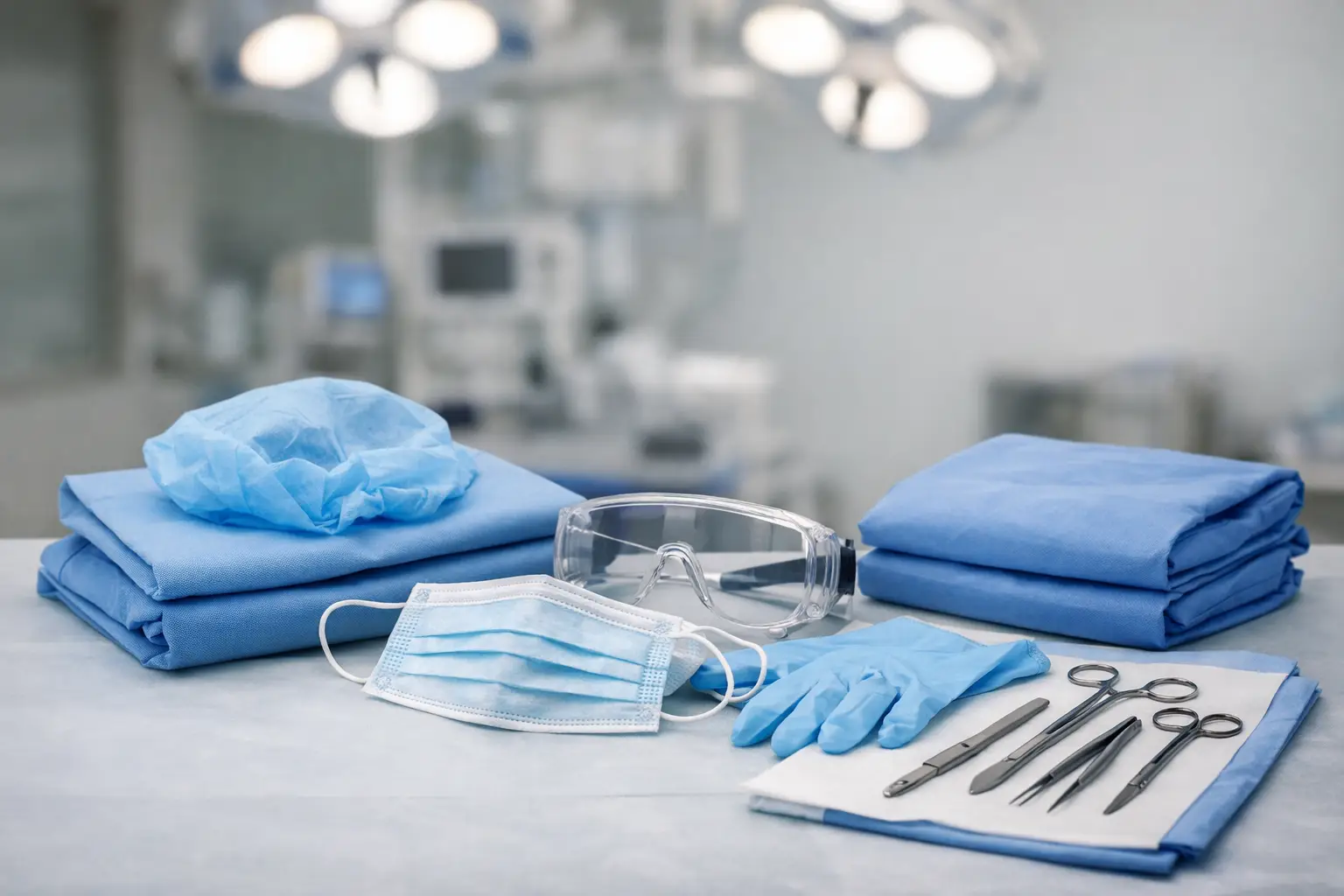
In the operating theatre there is no room for chance. That is exactly why the question, what should a surgical set consist of, is not only about how the outfit looks, but above all about comfort at work, hygiene and functionality during long shifts.
A well-chosen surgical set should support staff in movement, not distract with an uncomfortable cut, and withstand intensive use and frequent washing. In practice, every detail matters, from the type of neckline to the number of pockets and the way the fabric lies while working standing up, sitting down or bent over.
Surgical set - what should it consist of in practice
At its core, it is a two-piece set: a medical top and surgical trousers. This is the arrangement chosen most often because it gives freedom of movement, works well in shift work and makes it easier to adjust the size of the top and the bottom to the body. In many teams, this kind of set is the everyday standard.
The mere fact that there are two pieces is not enough. The top and trousers must be designed for the real work environment. That means the clothing should not squeeze, slip down, be see-through or limit the range of movement of the shoulders, back or knees. Medical staff work dynamically, so a surgical set should hold its shape throughout the day, not just look good when first put on.
In some facilities, additional items such as a cap, medical footwear or an outer layer for moving outside the procedure area are added to the set. They are not always part of the surgical set itself, however. In clothing terms, the core remains the top and trousers, while everything else depends on facility procedures, the nature of the ward and work organization.
Surgical top - what really matters
The top should feel comfortable from the first wear. The key point is a cut that gives freedom in the shoulders and chest without being too loose. Clothing that is too wide can get in the way, while clothing that is too fitted quickly makes itself felt when bending, raising the arms or working a long shift.
The most common choices are models with a V-neck or a classic, simple finish close to the neck. The neckline should be comfortable enough not to press, but stable enough for the top to lie well. Length also matters. A top that is too short can ride up while moving, while one that is too long may be uncomfortable and visually weigh down the silhouette.
It is worth paying attention to sleeves and the shoulder line. In surgical clothing, the best solutions are those that do not restrict arm movement. If the cut is poorly designed, tension in the material appears exactly where it should not, at the shoulder blades, under the arms and across the upper back.
Pockets are a topic that depends on the role. For some people they will be essential, for others less important because of procedures or the nature of the job. If the top has pockets, they should be positioned so that they do not disturb the line of the garment and do not pull the fabric down when small accessories are placed inside.
Surgical trousers - comfort throughout the whole shift
Trousers in a surgical set are responsible for the comfort that is felt most clearly after a few hours of work. This is the part that must fit well both in motion and during long periods of standing. The waistband, leg width and the way the fabric works at the knees and hips all matter.
The most practical models are those with an elastic waistband, a drawstring or a combination of both. That system gives more control over the fit and works better for different body types. In team orders, this is especially important because one cut does not always sit equally well on every person.
The legs should be neither too wide nor too narrow. A narrow cut may look neat, but if it limits stride or becomes tight in a squat, it quickly stops being practical. On the other hand, trousers that are too loose can get in the way while moving quickly. A good surgical set keeps a balance between comfort and a neat appearance.
Pockets in trousers are useful, but just like on the top, their number should result from real needs. The point is not for the clothing to have as many extras as possible, but for every detail to be justified. This is especially important where simplicity, ease of keeping the clothing clean and comfort during an intense working day matter.
Material matters more than it seems
Even the best cut will not work if the fabric is too stiff, too thin or not resistant enough to frequent washing. In surgical clothing, the material has to combine several features at once: it should be comfortable, durable, breathable and easy to care for.
In practice, fabrics with a blend of fibers that improve elasticity and resistance to everyday use work well. The composition alone does not give a full answer, but it helps assess whether the clothing will hold its shape better, wrinkle less and work more comfortably on the body. This is especially important when the set is worn for many hours without a chance to change.
The material should not be see-through or excessively thin. At the same time, fabric that is too thick may cause discomfort in warmer surroundings and reduce comfort during high activity. That is why the material should always be assessed in the context of the actual workplace. The needs of operating theatre staff will be different from those of a treatment room or a laboratory.
Resistance of color and shape to repeated washing also matters. Medical clothing should keep a neat appearance not for a week, but for much longer. If a set loses color, deforms or becomes stiff after a few wash cycles, the cost of a seemingly attractive purchase quickly rises.
Which details increase the functionality of a surgical set
It is usually small solutions that decide whether clothing is merely there or whether it really helps at work. Seams should be strong but not noticeable. The finish of the neckline and waistband must hold its shape, and the fabric should fall naturally without needing constant readjustment.
It is good when the set provides freedom of movement in key areas, around the shoulders, back, hips and knees. In practice that means enough construction allowance and a cut that works with the wearer. This matters both for doctors and nurses and for laboratory or office staff, where movement may be less dynamic but is still repetitive and demanding.
Aesthetics matter as well. A neat, well-fitted surgical set strengthens a professional image and simply gives greater mental comfort. This is not about fashion for fashion's sake, but about clothing that fits well, looks clean and does not feel random.
Choosing the size - a common purchasing mistake
Even a high-quality surgical set will not do its job if the size is wrong. The most common problem is choosing a fit that is too loose "just in case" or a model that is too fitted and looks good only when standing still. In medical work, full range of movement matters, so a set should be judged not only visually but also in use.
When buying, it is best to check the size chart and compare the measurements with clothing that already works well. For team sets, it is worth taking body-shape differences into account and allowing the top and the bottom to be chosen separately if the offer makes this possible. This reduces the number of unsuitable purchases and makes it easier to assemble a consistent outfit for the whole facility.
If staff work in shifts and the clothing is heavily used, it makes sense to think not only about a single set but also about rotation. Two or three well-chosen sets usually work better than one that has to cope with everything. From the point of view of comfort and durability, this is simply a more practical solution.
Surgical set for one person and for a team
Buying for an individual user and ordering for a whole facility follow slightly different rules. A person buying for themselves usually focuses on the cut, comfort and personal preferences. Team orders also need to consider color consistency, size availability, predictability of future orders and how easy it is to adapt the clothing to different roles.
That is why, for larger purchases, it is worth choosing models that combine a universal, professional look with practical details. A very elaborate cut may not work across an entire team, while something too basic will not always provide enough comfort during intensive work. The best solutions are balanced, neat, comfortable and easy to repeat in future orders.
This is the direction taken by brands such as EXP Odzież Medyczna, which combine a modern cut with the functionality that matters in everyday use. For staff, that means fewer compromises between appearance and comfort, and for facilities a more predictable purchasing process.
A well-assembled surgical outfit should not draw attention to itself while people are working. If the top and trousers are chosen correctly, the material keeps its shape and the cut supports movement instead of limiting it, the clothing simply does its job. And that is exactly what you should expect from a surgical set: that it works with you throughout the whole shift, not against you.