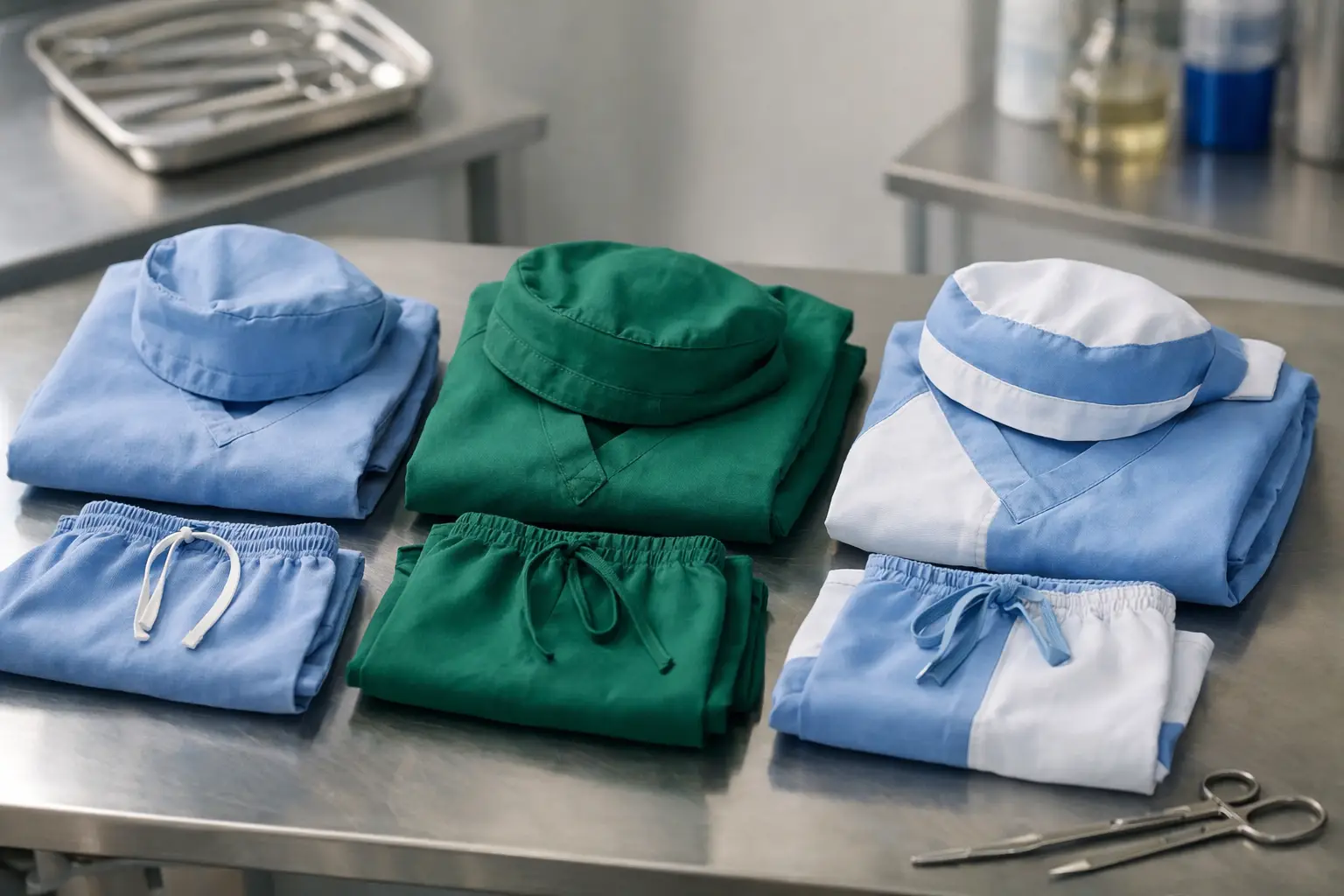
When choosing clothing for the operating theatre, the ward or the consulting room, the same question usually comes up: cotton, polyester or blended surgical clothing - what works best? This is not a technical detail from the label. Fabric composition has a real impact on comfort during a shift, how the garment looks after washing and whether the set still fits well after a few months of intensive use.
In practice, there is no single ideal material for everyone. Much depends on the nature of the work, the ambient temperature, how often the clothing is washed and whether you are buying it for yourself or for an entire team. That is why it is worth comparing not only the names of the fabrics, but also how they behave in everyday use.
Cotton, polyester or blended surgical clothing - where to start the choice
The simplest place to start is with one question: what do you expect most from the clothing? If the priority is the natural hand feel of the fabric and breathability, cotton may seem like the first choice. If durability, a stable appearance and quick drying matter more, polyester has stronger arguments. Blended fabric is usually created precisely to reduce the weaker sides of both options.
In medical clothing and surgical clothing, the composition alone does not say everything. Fabric weight, weave, finishing and cut matter as well. Two tops with a similar percentage of cotton and polyester can behave very differently if one has a stiffer fabric and the other a softer, more elastic structure.
Cotton - comfort and a natural feel when worn
Cotton has long been valued for comfort. It feels pleasant against the skin, breathes well and gives a natural feeling when worn, which matters a lot to many people during long hours of work. In warmer rooms or during intensive movement, it may simply feel more comfortable than a fully synthetic material.
Its advantages are especially appreciated by people who do not tolerate stiffer fabrics well or who look for clothing that feels soft from the very first wear. Cotton often works well where high comfort in contact with the skin throughout the day is important.
It should be said honestly, however, that cotton has its limitations. It usually wrinkles more strongly, dries more slowly and, with frequent washing, may lose its original look faster. Depending on the fabric quality, it may also shrink more or require more careful ironing. For staff who wash their clothing very often and expect it to be ready for reuse quickly, that matters.
In a medical environment, where clothing works hard almost every day, pure cotton may be a good choice for people who value naturalness and comfort most of all, but it will not always be the most practical solution in the longer run.
Polyester - durability, less creasing and quick drying
For a long time, polyester was associated mainly with technical fabric that was less pleasant to wear. Today, many modern polyester materials perform much better in this regard than older versions. In surgical clothing, its biggest strengths are very concrete: good resistance to frequent washing, less tendency to crease, shape retention and faster drying.
This matters especially where clothing is used intensively. If a set is meant to look neat for a long time, keep its color and not require much work after washing, polyester has a clear advantage. For facilities ordering larger quantities of clothing, it also means greater predictability in use.
The downside may be lower thermal comfort for some users, especially if the material is less breathable or has a stiffer finish. Not everyone feels good in clothing with a high polyester content during a long shift in warmer surroundings. That is why the fact that a garment is durable does not automatically mean it will be the best choice for every role.
Polyester therefore makes sense where functionality, resistance and ease of keeping the clothing in good condition matter most. In many cases, it is a very sensible choice, but it usually works best when paired with a well-designed cut and a fabric finish that feels friendly in use.
Blended fabric - the most common golden mean
If you look at what users of professional medical clothing most often choose, blends of cotton and polyester are very often the winners. The reason is simple: such a composition is supposed to combine wearing comfort with greater durability and easier care.
A well-selected blended fabric usually wrinkles less than pure cotton, dries faster and holds its shape better, while still remaining more pleasant to wear than a fully synthetic material. It is especially practical for people who need clothing for everyday, intensive work and do not want to go to the extreme of full naturalness or maximum technical feel.
That is why blended clothing often works well on wards, in consulting rooms, in laboratories and in team purchases. It gives a better chance that one model will be acceptable for different users, and that matters a lot in staff orders.
That does not mean every blend will be equally good. A lot depends on the fiber proportions. The more cotton there is, the softer and more natural the feel usually is. The more polyester there is, the better the stability and the easier the care. That is why it is worth reading the composition not only quickly, but in the context of your own work pattern.
What works best in everyday use
If the question is practical rather than theoretical, the answer is usually this: a good-quality blended fabric works best. Not because it is fashionable, but because it responds most effectively to the everyday conditions of medical work. It combines comfort with durability and reduces the compromises that are more noticeable with pure cotton or pure polyester.
For an individual user, however, the choice may be different. Someone working in a calmer rhythm, in a well-ventilated consulting room, may consciously choose a higher cotton content. In turn, where clothing is washed constantly, rotates quickly and needs to maintain a presentable look with minimal effort, a higher polyester content may prove more practical.
In B2B purchases, blended clothing is most often the safest decision. It is easier to keep a team looking consistent, simplify care and reduce the risk that, after a short time, some sets start looking more worn than others. For facilities, that matters more than it may seem at first glance.
What to look at beyond the material composition
Composition is the foundation, but it is not the only criterion. In surgical clothing, the cut is just as important, because even a very good fabric will not compensate for restricted freedom of movement. Practical details also matter, such as pocket placement, the way the neckline is finished, leg width or waistband elasticity.
It is also worth paying attention to how the material keeps its color after repeated washing and whether it does not lose its appearance too quickly. For many people, medical clothing should look professional not only on the first day, but also after many weeks of work. That is especially important in facilities that care about a consistent team image.
Choosing the right size matters as well. A set that is too tight will be tiring regardless of excellent composition, while one that is too loose may get in the way. That is why, when buying, it is worth treating the material and the cut as one whole rather than two separate topics.
When to choose cotton, when polyester and when a blend
Cotton will be a good choice for people who value naturalness, softness and breathability most and accept more demanding care. Polyester will work where durability, quick drying and less creasing are the priority. A blend most often wins when you need clothing for regular, intensive work and want the best possible balance between comfort and practicality.
That is why, in the daily reality of medical staff, the question should not be which material is objectively the best. It is better to ask which material best fits the way you work, how often the clothing is washed and what you expect from its appearance. This approach usually leads to a more accurate purchase than choosing by fabric name alone.
If you want a set that looks good, does not restrict movement and withstands intensive use, it is worth choosing not only the composition but the whole construction of the product. In practice, it is the combination of fabric, cut and workmanship that decides whether the clothing performs really well during work instead of just looking good in the description.