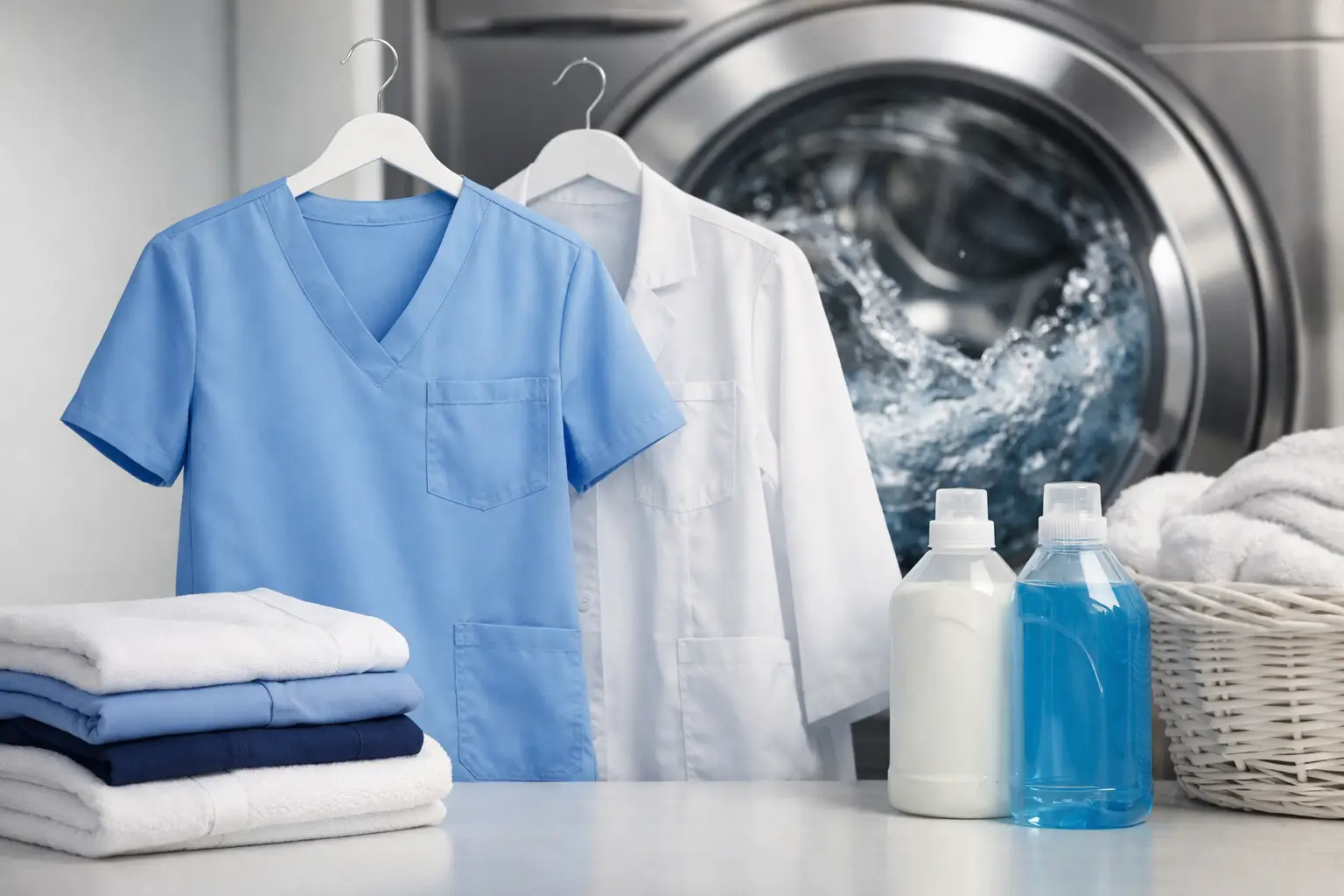
The first signs of poor quality are usually visible not when receiving the package, but after several shifts and several washing cycles. The material begins to lose its color, the seams work differently than at the beginning, and the cut no longer fits as it should. Therefore, medical clothing resistant to frequent washing is not a detail, but a real selection criterion for people who work intensively and need clothes ready for everyday use.
In practice, good durability means more than just the strength of the fabric. What also matters is whether the set maintains its aesthetic appearance, whether it does not deform after drying, whether the colors remain consistent and whether the clothes still allow freedom of movement at the end of a long working day. This is important both for an individual user and for the facility that orders clothing for the entire team.
What does resistance to frequent washing really mean?
In medical clothing, washing resistance is not limited to the slogan on the label. It is about the ability of the material and structure of the clothes to maintain their properties despite regular contact with water, detergents, higher temperatures and intensive use. If the set still fits well after a dozen or so washes, is not more transparent than at the beginning and does not lose its shape, we can talk about real durability.
It is worth looking at this parameter more broadly. The fabric may be strong, but if the seams are weak or the cut has been poorly designed, the whole thing will quickly stop working. In turn, well-made clothing made of a properly selected fiber mixture usually withstands everyday stress better and maintains a professional appearance for longer.
Why does frequent washing put so much strain on medical clothing?
Clothing used in health care works in different conditions than everyday clothes. It is worn for many hours, exposed to intense movement, frequent sitting, bending and contact with various surfaces. In addition, there is regular washing, often more frequent than in the case of regular work clothes.
Each washing cycle puts a strain on the fibers, color and structure. The material may pill, shrink or stiffen. Pockets and places that are most used begin to deform, and if the fabric was of average quality, changes appear quickly. However, in the medical environment, it is not only about technical durability. A neat appearance is also important because it influences the comfort of work and the reception of staff by patients.
Which materials are best for frequent washing
There is no one perfect composition for everyone. A lot depends on the nature of the work, the preferred cut and whether the user focuses more on lightness or greater mechanical resistance. In practice, fiber mixtures that combine wearing comfort with durability and shape stability work very well.
Cotton is breathable and feels pleasant on the skin, but in its pure form it may be more susceptible to creasing and shrinkage. Polyester increases wear resistance, helps maintain color and dries faster. The addition of elastane improves freedom of movement, which is important during long shifts and working in constant motion. Well-designed medical clothing is usually based on this a reasonable combination of features, and not on one fashionable parameter.
Medical clothing resistant to frequent washing - what to look for before buying
When choosing, it is worth starting with the description of the fabric, but not ending there. The composition of the material itself does not tell everything. What matters is the weight, the sewing method, the quality of finishing and how a given model has been designed for everyday use.
It is a good idea to check whether the seams are even and whether critical areas have been adequately reinforced. Pockets are also important because they are often the quickest to show how clothes react to regular use and washing. If the cut is too tight in the shoulders, hips or thighs from the beginning, the fabric and seams will work under greater load, which will shorten the life of the set.
In the case of purchases for teams, there is another issue - repeatability. Clothing should maintain a similar appearance over time so that staff continue to look consistent. This is especially important in offices, clinics and laboratories, where the aesthetics of clothing are an element of the facility's image.
The color and style are also subject to testing
Frequent washing verifies not only the durability of the material, but also whether the clothes still look professional. Color fading is one of the most common problems. If, after a relatively short period of time, the navy blue becomes visibly faded and the black loses its depth, the garment begins to look worn more quickly, even if it is still technically wearable.
It's similar with the style. Well made medical top or a pair of trousers should retain its line after washing. If the legs twist, the neckline loses its shape or the fabric begins to drape unevenly, everyday comfort immediately decreases.
Mistakes when choosing clothing for intensive use
The most common mistake is to focus solely on price. Cheap clothes may look good at first, but if they need to be replaced after a short time, the savings become apparent. This applies to both single purchases and larger staff orders.
The second problem is choosing the wrong size. Clothing that is too tight wears out at the seams more quickly and loses its shape, while clothing that is too loose may fit worse after washing and interfere with work. The third mistake is skipping care instructions. Even very good clothing will not maintain its parameters if it is washed regularly in a manner that does not meet the manufacturer's recommendations.
How to care for medical clothing so that it stays in shape longer
The durability of clothes depends on quality, but also on daily care. It is worth washing clothes according to the labels and avoiding settings that unnecessarily burden the fibers. Too high a temperature, aggressive washing agents or an overloaded drum may accelerate the wear of the material.
It is good practice to wash clothes in similar colors and not to throw them together with items that have zippers, sharp elements or heavier fabrics. It's a detail, but such details affect the condition of the material surface and the durability of the seams. If you want your clothes to remain aesthetically pleasing, it's also a good idea not to put off washing until long after your shift ends.
When durability is more important than fashion, and when you need to combine both
In medical clothing, appearance is important, but it should not dominate over functionality. A modern cut, well-chosen neckline and refined proportions are important because they affect comfort and professional perception. At the same time, a material that is too delicate or a design based solely on the visual effect may not be suitable for shift work.
The best choice usually lies in the middle. Clothing should look good, but above all, withstand the rhythm of everyday use. That is why in practice the best models are those that combine aesthetics with a well-thought-out cut, appropriate fabric composition and quality of workmanship. EXP Odzież Medyczna also consistently chooses this direction, responding to the needs of people who want to look professional without sacrificing durability.
Medical clothing resistant to frequent washing in B2C purchases and B2B
A person buying one or two sets for themselves pays attention mainly to comfort, fit and whether the clothes will survive an intense work week without losing shape. For individual customers, it is also important to feel that the purchase will not require a quick replacement after a few months.
In team procurement, the perspective is broader. What matters is the predictability of quality, color consistency and the ability to select models for different silhouettes. Medical facilities need clothing that will look good not only on the day of implementation, but also after a series of washes and regular use by all staff. This is where durability translates directly into costs, organization and daily work standards.
So if you are faced with choosing a new set or planning outfits for the entire team, look not only at how the clothes look in the photo. The best test is the answer to a simple question: will this model still be comfortable, aesthetic and safe to use after many washes, and not just after the first wear.