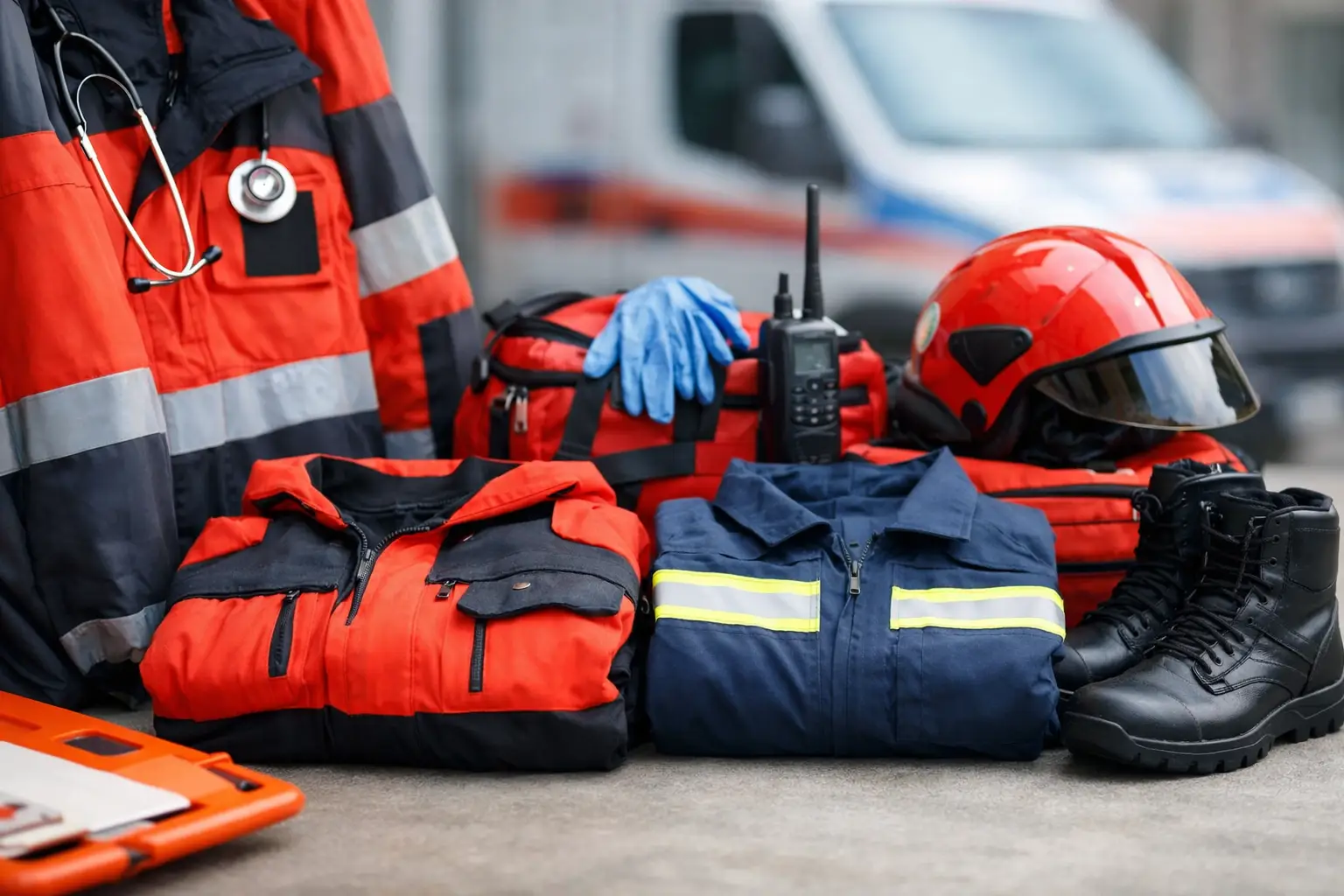
The duty does not forgive ill-fitting clothes. When you have to act quickly, bend down, carry equipment, work on the move and under time pressure, medical clothing for paramedics ceases to be a matter of aesthetics and becomes real support at work. Therefore, choosing a set, sweatshirt or trousers should not only come down to color or price.
Paramedics work in conditions where comfort for many hours, freedom of movement and material resistance to intensive use are important. The clothes must fit well, not restrict movement and withstand frequent washing. At the same time, it should look professional, because a neat image also builds patient trust and improves the team's work standard.
What should medical clothing for paramedics be like?
In practice, clothing designed for long-hour shift work works best. The key are fabrics that keep their shape, do not deform after washing and provide comfort even when the working day has long exceeded the schedule. Soft material alone is not enough. What also matters is that the clothing does not tighten when moving, does not ride up when bending and does not limit the freedom of the arms.
A well-selected medical kit for a paramedic should combine several features at the same time. First of all, convenience, because work takes place in constant motion. Secondly, functionality, because pockets and a well-thought-out cut really make a difference. Thirdly, durability, because work clothes are washed regularly and used much more intensively than standard everyday clothes.
It is also worth remembering that not every paramedic works in identical conditions. A person working on SOR may have different needs, a member of the medical transport team, and still different needs of staff securing mass events. Therefore, the choice should not be random. This is not "for a moment" clothing, but an element of everyday work equipment.
A cut that works with you
In practice, most problems do not result from the quality of the material, but from the ill-fitting cut. Trousers that are too narrow, fabric that is tight in the shoulders, or a top that rides up with every movement can quickly make themselves felt. Even if a piece of clothing looks good on a hanger, it may simply not work when you're on duty.
Therefore, it is worth paying attention to styles that allow freedom of movement without the effect of excess material. A well-designed medical shirt should neither be too loose nor too fitted. Similarly, trousers - they must provide comfort when walking, bending and working in a sitting position, but at the same time maintain a professional appearance.
Construction details play an important role in modern medical clothing. Properly placed seams, an elastic waistband, a practical neckline and well-placed pockets influence everyday comfort more than seemingly impressive accessories. This is especially important for people who carry small accessories, a phone or a notebook with them throughout their shift.
Pockets and utility details matter
In a paramedic's work, functionality is not an addition, but the basis. Pockets should be spacious enough to accommodate the most necessary things, but they cannot interfere with movement. If they are too shallow they will be impractical, if they are too loose they may make work difficult.
Ease of use also matters. Work clothes should be intuitive - you put them on and you know that everything is where it should be. It's a small thing, but during intensive work, such elements create real comfort.
The material is resistant to the pace of work
Rescue is an environment in which clothing is constantly used. Frequent washing, long hours of wearing, fast pace of operation and exposure to various conditions mean that the material must be selected really well. If the fabric quickly loses its color, stretches or stiffens after several washes, the purchase turns out to be only an apparent saving.
Materials that connect work best durability with comfort wearing. They should be pleasant in contact with the skin, but at the same time resistant to everyday stress. In practice, fabrics that retain their shape, do not require troublesome care and look neat even after many washing cycles perform well.
There is also a question of compromise here. Very thin material may be breathable but less resistant. On the other hand, very thick fabric may be durable, but may provide less comfort after long periods of work. Therefore, it is best to choose clothing designed specifically for medical purposes, rather than random work-style clothes.
Is material flexibility always needed?
In many cases, yes, but it does not always have to be the most important criterion. The admixture of elastic fibers improves comfort and range of motion, especially during intense changes. However, if the cut is well designed, a less elastic fabric can also work very well.
The most important thing is to combine these two elements - a sensible design and a material suited to the nature of the work. Stretch alone will not save poorly cut trousers, just as a great cut will not compensate for poor quality fabric.
How to choose a medical kit for a paramedic
The most convenient solution is usually a set consisting of a sweatshirt and medical pants. This set gives a consistent look, facilitates daily preparation for work and allows you to better control the fit. For some people, separately selected items will be a better choice, especially if the silhouette requires different sizes of top and bottom.
When choosing, it is worth starting from real working conditions. If the change is intense and dynamic, it is better to choose light, comfortable sets with a free cut. If the clothing is also to serve a representative function in a facility or a private medical team, the aesthetics of the finish, color consistency and neat cut will be of great importance.
The size should be chosen without guessing. A size chart and comparing dimensions with your own, proven clothing is the easiest way to avoid a wrong purchase. In workwear, a size that is too tight is usually more problematic than a light fit, but a suit that is too loose can interfere with work. Balance is what counts here.
Medical clothing for paramedics in shopping for teams
In the case of orders for several people or entire establishments, the selection criteria are slightly different. In addition to comfort and durability, the repeatability of sizes, the availability of larger numbers of pieces and the consistent appearance of the assembly become important. This is particularly important where clothing is intended to enhance the professional image of staff and facilitate work organization.
Models with universal, modern cuts that fit various silhouettes work well for group purchases. It is also worth choosing solutions that are easy to reorder. If after a few weeks you need to replenish missing sizes or order clothing for new employees, the consistency of the collection is of great importance.
An efficient purchasing process is also important for branches and teams. Clear information about sizes, variants and availability shortens decision time and reduces the number of mistakes. This is one of the reasons why many B2B customers chooses stores specializing in medical clothing, such as EXP Odzież Medyczna.
What to watch out for when buying
The most common mistake is to focus solely on price. A cheaper set may look good at first, but after a few washes it begins to lose its shape, color and comfort. As a result, it has to be replaced faster, which means additional costs.
The second problem is choosing clothes without checking the cut and purpose. Clothes for light office work will not always work well in a rescue environment. If clothing is to work intensively, it must be prepared for it structurally and materially.
It is also worth being careful about selecting the size too randomly. Rescuers often choose clothes "by eye", based on the sizes of everyday clothing, and this does not always work. Each manufacturer has its own size guide, so it's better to spend a moment verifying the dimensions than to have to deal with a return or an uncomfortable set later.
When is it worth having more than one set?
One set rarely lasts long. During regular shifts and frequent washing, the second or third set simply makes it easier to organize work. It's convenient, but also a way to make clothes wear out slower.
An additional set also gives you more flexibility. You can match clothing to the conditions, season or nature of the change. In practice, many people choose one more basic set for everyday work and another, slightly more representative one, when they want a particularly neat appearance.
Well-selected medical clothing for paramedics should not distract attention during the shift. It has to be comfortable, durable and predictable - just like the equipment you rely on every day. If your clothes support you at work instead of hindering you, it was a good choice.