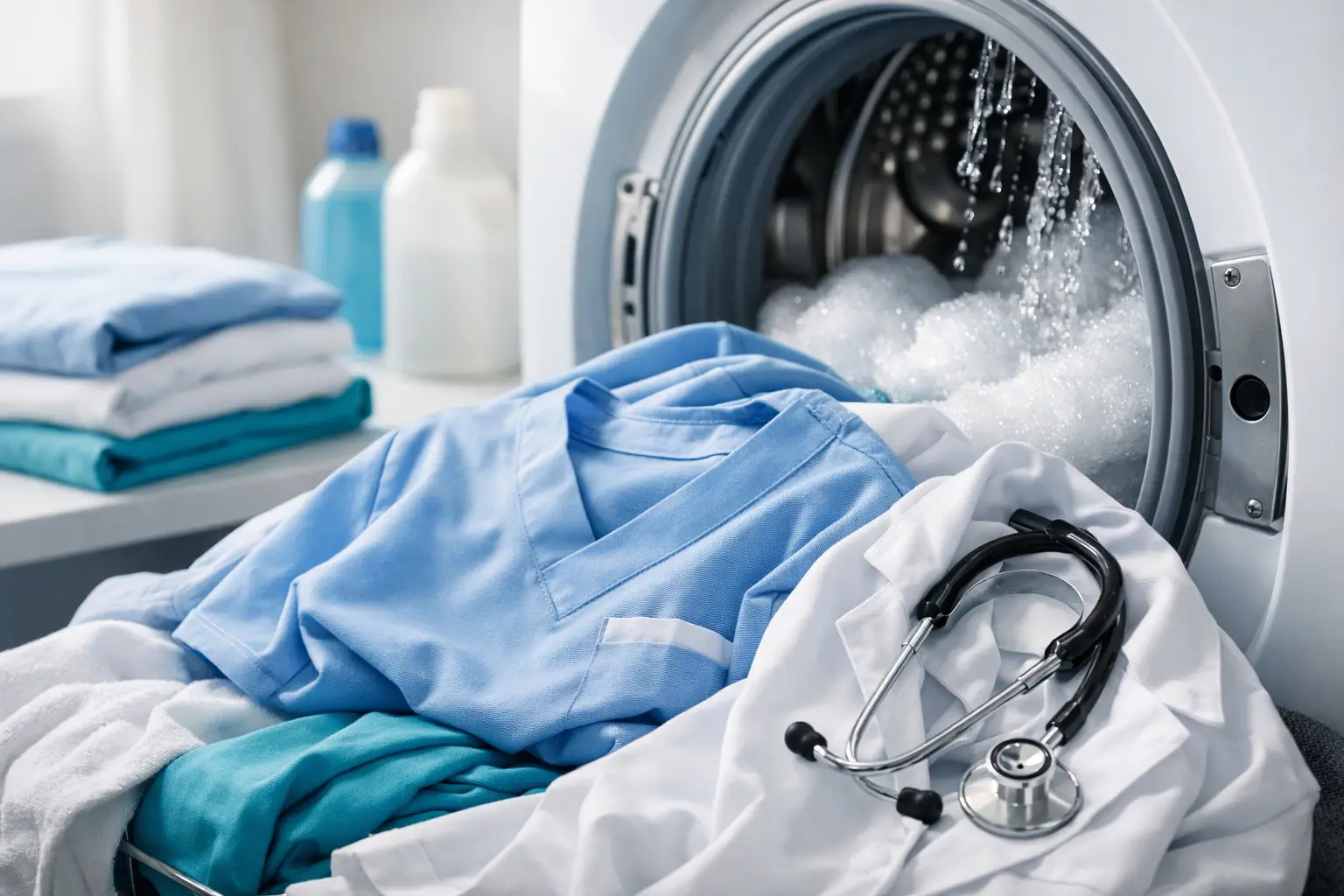
Clothes are not easy in medical work. Contact with liquids, frequent changes, intensive use and regular laundry make the subject of care not an addition, but a part of the daily organization of work. If you are wondering how to wash medical clothing, it is worth to approach this practically - so as to maintain hygiene, good appearance and durability of the material for as long as possible.
Well laundered medical clothing should be clean, fresh and still comfortable to wear. It's not just the temperature set on the washing machine. Also important is the fabric composition, color, type of dirt and whether you are washing a single set for yourself or organizing a clothing circulation for the whole team.
How to wash medical clothing to serve longer
The first rule is simple - always start with the tag. It's not a formality. The manufacturer shall indicate there the maximum washing temperature, the possibility of drum drying, ironing and possible restrictions on chemical agents. In the case of modern medical sets , scrubs or coat we often deal with mixtures of fibers that well endure frequent laundry, but are less responsive to too aggressive treatment.
The most common error is washing everything at one temperature and one program. The fabric doesn't match. Cotton with higher weight will withstand more than light material with the addition of elastane. On the other hand, clothes with a modern cut, which is designed to lie well and provide freedom of movement, can quickly lose form at too high a temperature or too strong spinning.
In practice, it is best to separate medical clothing from normal household clothes. It's a matter of hygiene, but it's also a matter of convenience. It is easier to choose the right laundry cycle, detergent and drying method.
Washing temperature - high does not always mean better
Many people assume that medical clothing must be washed only at very high temperatures. Depends. If the clothing is heavily soiled or requires special disinfection in accordance with the procedures in place in the facility, the higher temperature may be justified. However, in everyday use, with standard dirt and clothing made of mixtures of modern fibres, often sufficient temperatures are indicated on the label.
Too frequent washing in very hot water has its price. The colors fade faster, the material can shrink, and the fibers lose elasticity. This is especially important with medical top , rubber pants in belt or set fitted to the silhouette. If clothing is to look professional not only after the first week, but after many shift, it is worth sticking to the manufacturer's recommendations rather than habits.
How to prepare clothes for washing
It is good to empty pockets before throwing clothes into the washing machine, fasten the locks and turn the things to the left. It's a small step, but it really affects the appearance of the fabric. This makes the outer layer less abrasion, and the color stays even longer.
Spots should be treated immediately instead of waiting until the end of the week. Dry dirt comes down harder and often requires stronger means that burden the material more. It is better to act quickly and spotlessly than later to wash the whole in a sharper program.
What to avoid when washing medical clothing
The most damage does not cause the laundry itself, but bad habits. This applies especially to clothing used several times a week.
Strong chlorine bleach can weaken fibers and decolor the fabric. With white clothing, they seem to be an obvious choice, but not every fabric can bear them well. The same is true with excess detergent. The clothes will not be cleaner at all, and the remnants of the washing agent can embed in the material, affect the comfort of wearing and accelerate the rigidity of the fabric.
Carefully approach softening fluids. They give a pleasant effect to the touch, but with some materials they reduce breathing and can affect the performance of clothing. In working clothes that are supposed to look good and work for many hours, more important than softness can be the stability of the fabric and the ease of keeping it clean.
Sorting is more important than
A good practice is to divide clothing not only into bright and dark, but also according to the degree of dirt and the type of material. This is especially useful when different types of clothing are used in one facility - from light scrubs to classic coat .
Washing everything together shortens the service life of more delicate elements. Dark medical trousers can dye lighter top and heavier fabrics can mechanically weigh lighter. The effect is faster wear, which you can see earlier than you should.
Drying and ironing - a stage that often determines the look of
After finished washing it is not worth leaving clothes in the washing machine for longer. The material picks up a bad smell faster, and the britches get harder to remove. It is best to remove the clothes immediately, shake and hang them in such a way that they remain in shape.
Drying in a tumble dryer can be convenient, but it is not always the best solution. The high temperature can reduce the durability of elastane, affect the fashion and accelerate the wear of printing or piercing. If the manufacturer allows mechanical drying, it is worth choosing milder settings. When you want to keep your clothes long, drying in the air is usually safer.
Ironing should also be adapted to the material composition. Not every medical clothing requires this. Many modern fabrics after proper hanging look neat without additional processing. It's a practical solution for staff who doesn't want to waste time before the next shift.
How to wash medical clothing at home and as in
facilityPrivate person and medical facility operate under different conditions, therefore the care may vary as well. If you wash your clothes yourself at home, the most important are consistency, separation of work clothes from everyday clothes and compliance with the manufacturer's recommendations. This is the easiest way to maintain hygiene and the aesthetic look of set.
There is a matter of standardization in facilities or with larger orders for teams. It is worth setting clear rules regarding temperature, washing agents, sorting and circulation of clothing. This makes it easier to maintain the consistent appearance of staff and the predictable durability of clothes. This is especially important when the team uses uniform colors and certain styles.
Repeatability is also important for offices, laboratories and larger units. Even well - designed clothing will be used more quickly if everyone washes it differently. Standardized rules really make a difference.
When clothing looks clean but no longer suitable for work
Laundry does not solve everything. It happens that the clothes are washed, but it loses its style, clears out, stretches in the knees or stops getting well on the silhouette. In the medical environment, aesthetics is practical - neat appearance builds professional reception and affects the comfort of work.
If after several months of intensive use the material becomes rough, discoloured or permanently deformed, the problem is not always the laundry itself. Sometimes it is a sign that clothing was too poorly adapted to the conditions of use. With frequent washing and regular changes, models designed for intensive operation are best suited - comfortable, resistant and dimensionally stable.
Therefore, when you buy it it is worth looking not only at color or cut, but also at how the material behaves after multiple washing. It is this stage that most often verify the real quality of the product.
Good care starts with good clothes
Even the best laundry rules will not help if the clothes have not been prepared to work in a demanding rhythm from the beginning. Medical clothing should withstand frequent washing, retain color, unobtrusive movements and continue to look professionally after many shift. It is important for single users as well as for dressing facilities for all staff.
W EXP Medical clothing well understand that the durability of the material is not an addition, but one of the basic criteria of choice. Therefore, with daily care it is worth to think long-term - not how to wash clothes at all costs, but how to maintain its function, appearance and comfort for a long time.
If you want medical set to work well together with you, treat laundry as part of your use rather than a final duty after change.