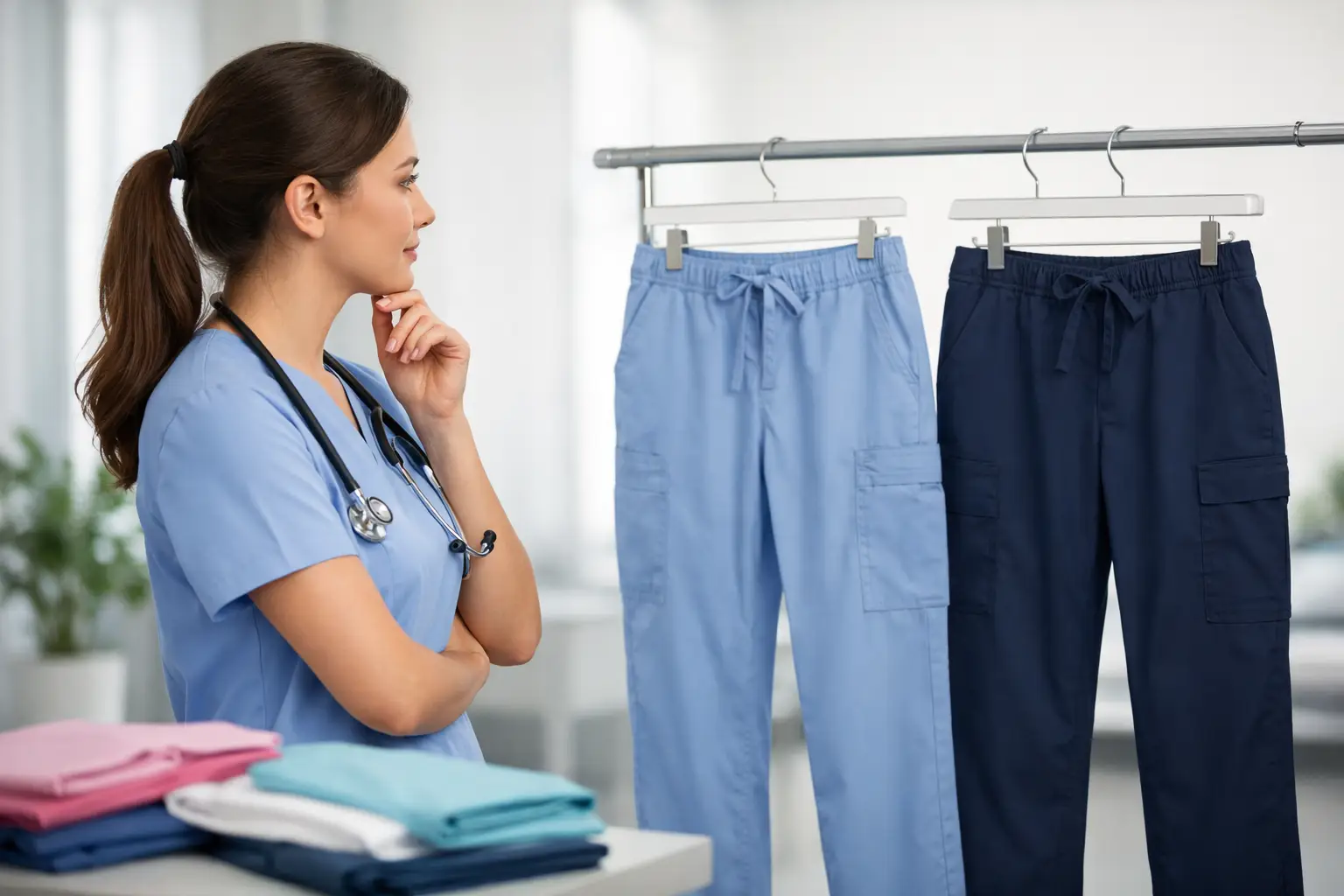
Poorly fitted medical trousers are noticeable after the first shift. The legs ride up when sitting down, the waistband becomes tight after a few hours, and the material stops working with the body when you have to bend down quickly, approach a patient, or walk across the ward. If you're wondering how to fit women's medical trousers, it's worth considering this choice not only through the lens of size, but also the cut, length, waistband type, and actual work conditions.
How to match women's medical trousers to everyday work
In medical clothing, simply "fitting well" isn't enough. Pants should look professional, but above all, they should allow for freedom of movement for many hours. A person working in an office will look for different qualities, a nurse on intensive duty, and laboratory staff who frequently change positions and work at countertops will look for different ones.
Therefore, the fit begins with a simple question: at what pace will they be worn? If your workday involves frequent bending, moving quickly, and sitting down repeatedly, styles with a slight amount of room in the thighs and hips are better. If you're looking for a clean, modern design for work in a doctor's office or medical reception, you can choose a more fitted model, but still without constriction or restriction.
This is where the most common purchasing mistake occurs. Many people choose trousers as they would classic everyday clothes. However, medical clothing works differently. It needs to look good not only when standing but also when moving.
Size is just the beginning
The most important measurements are waist, hips, and inseam, but size alone doesn't give the full picture. Two people wearing the same size can fit completely differently, as waist-to-hip ratio, as well as the shape of their thighs and calves, all play a role.
Well-fitting women's medical trousers shouldn't be tight around the hips or create excessive tension at the crotch. On the other hand, a loose-fitting model quickly loses its aesthetic appeal and can be distracting during work. It's best to look for a style that allows for plenty of movement while still maintaining a neat, structured line.
In practice, it's worth paying attention to three signals: If the waistband digs in when you sit down, the size or cut is too small. If the material wrinkles excessively at the front and back, the model may be too loose. If the leg twists when you walk, the problem may be not only the size but also the style itself.
The cut matters more than it seems when buying
Straight leg
This is one of the most versatile choices. It works well on many body types and offers comfort without being too tight. This style is a safe bet when functionality and a neutral, professional look are important.
Tapered leg
A slightly tapered hemline looks more modern and usually looks good on shorter and medium-sized figures. However, be careful that the tapered fit doesn't restrict comfort during fast-paced activity. If you're a dynamic athlete, it's worth checking that the trousers aren't tight around the calves and knees.
Medical joggers
They're becoming increasingly popular due to their comfort and sporty, structured look. A drawstring at the leg helps maintain the proper length and prevents the material from getting in the way when walking. This is a good choice for those who move around a lot, but it's important to remember that this style won't fit the dress code in every workplace.
A belt that should support, not hinder
One of the most frequently overlooked elements is the waistband. It largely determines whether the trousers will remain comfortable after several hours of work.
An elastic waistband is practical and works well for shift work, especially when you frequently change positions. It offers greater flexibility and tends to fit more comfortably on a variety of body shapes. A drawstring waistband allows for more precise adjustment, which can be useful when waist and hip proportions deviate from standard sizes.
If trousers have a classic, less elastic waistband, they should be chosen with particular care. While this style may look aesthetically pleasing, it's less likely to withstand the fluctuations in comfort throughout a long day. There's no single perfect solution. If freedom is a priority, flexibility usually wins. If a formal look is more important, you can opt for a more structured design.
The length of the leg influences comfort more than the cut itself.
Pants that are too long can quickly become a problem. The material can rub against shoes, become dirty, lose its aesthetic appeal, and simply get in the way during intense activity. Pants that are too short also look unattractive, especially if they ride up when sitting or walking.
For best results, choose a length that matches the work footwear you actually wear. This is important because you'll see a different leg position when measuring barefoot than when wearing medical footwear. Joggers have a greater margin of error. For straight and tapered legs, the length should be assessed more carefully.
If you're between lengths, it's best to choose a model that won't drag on the floor. In medical practice, practicality takes precedence over fashion.
The material should work with you
When wondering how to fit women's medical trousers, it's easy to focus solely on the cut. However, the fabric composition is equally important. Even a well-chosen style won't work if the material is too stiff, lacks breathability, or easily creased.
Fabrics that combine durability with a touch of elasticity perform well in shift work. Such materials respond better to movement and retain their shape longer after washing. This is especially important when clothing is subject to heavy use and frequent washing.
It's also worth considering the thickness of the material. Thinner fabrics may be more comfortable in warmer environments, but they don't always provide the same durability and coverage as thicker fabrics. Very thick fabrics, on the other hand, may be durable but less comfortable during long shifts. The decision here depends on your workplace and your personal preferences.
Pockets you really need
Pockets in medical trousers aren't a bonus. For many people, they're a fundamental element of work organization. The problem arises when the pockets are poorly placed or too shallow.
If you're carrying small accessories, a phone, pen, or ID, check that the contents of the pockets don't interfere with the fit of the pants. In more fitted styles, full pockets can make the hips look wider or cause the fabric to stick out unnaturally. In such cases, styles with a slightly looser fit or pockets set in a way that doesn't visually overwhelm the silhouette are better.
For some users, fewer pockets mean a cleaner look and greater comfort. For others, the lack of pockets is an everyday inconvenience. Therefore, the best choice depends on the nature of the duties, not just the appearance of the product in the photo.
How to fit women's medical trousers to your figure
For figures with more pronounced hips, styles with an elastic waistband and straight or slightly tapered legs work well. This style balances proportions and prevents excessive tension in the fabric on the lower body.
If you have a more straight silhouette, you can choose more freely between a classic cut and joggers. In this case, the difference is often not the width of the pants, but the positioning of the waist and hips.
For fuller thighs, it's worth avoiding styles that look good on the hanger but lack comfort in movement. A leg that's too narrow can restrict your stride and cause faster wear in the areas where the fabric is most stressed. A safer option is a cut that's not too tight but still maintains a professional look.
Online shopping without making a bad choice
Buying medical clothing online makes sense when based on specific data, rather than being stuck in a single size. Before ordering, it's worth trying on pants that already fit well at work and comparing them to a size chart. This is simpler and more effective than relying solely on the standard S, M, or L.
It's also a good idea to read the descriptions for cut, waistband type, length, and material composition. This information really helps predict how the pants will perform during use.At EXP Odzież Medyczna, this stage is particularly important because it allows you to choose a model that is closer to real needs, not just aesthetic expectations.
When assembling team clothing, it's worth considering more than just color and size. Visual consistency is important, but staff comfort impacts everyday use just as significantly. A uniform design for everyone isn't always the best solution if the team has different body types and responsibilities.
Well-fitting medical trousers shouldn't draw attention while you're working. This is usually the best sign that you've made the right choice – nothing constricts, nothing rides up, and nothing distracts when speed, comfort, and a professional appearance are key.