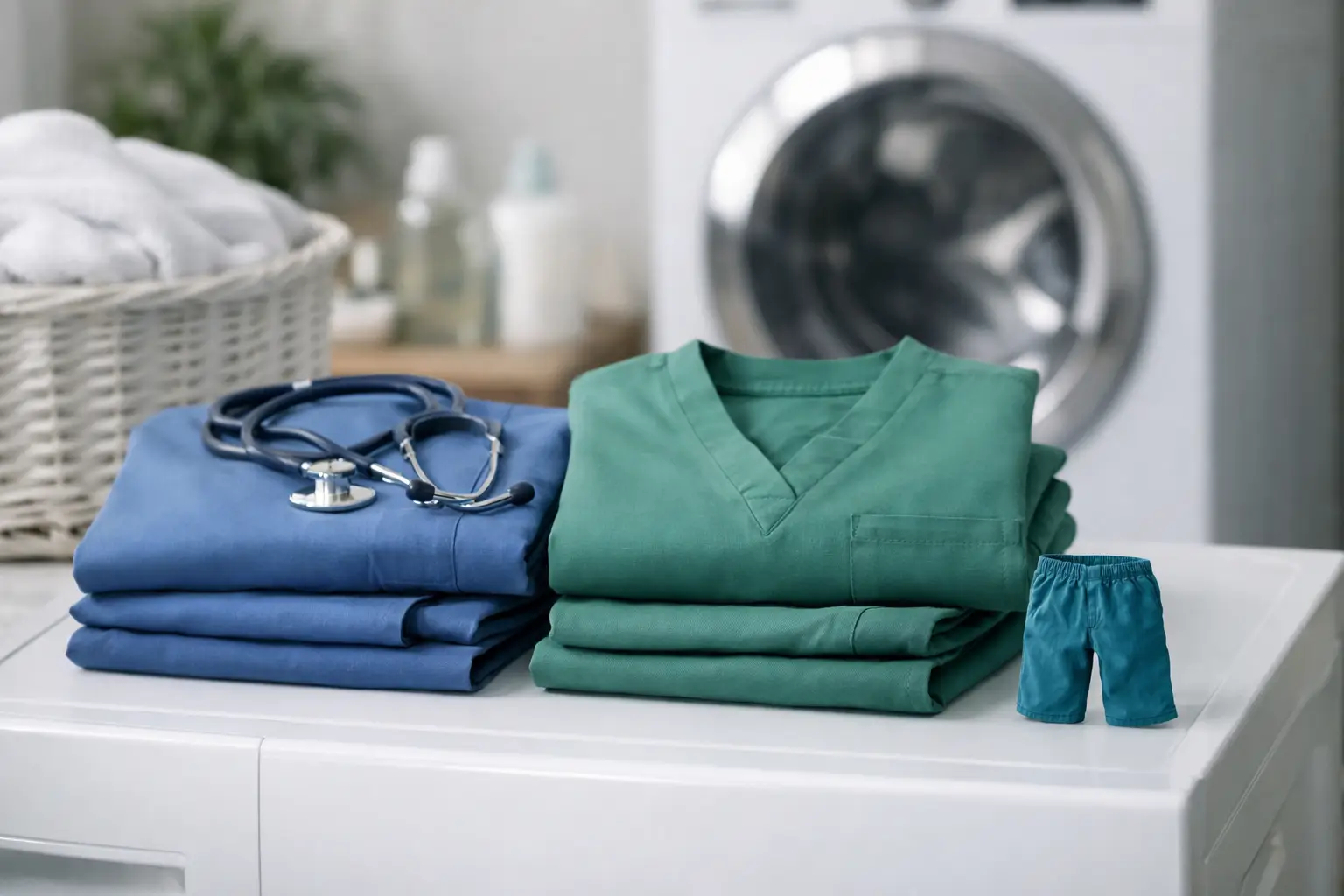
The question "do scrubs shrink?" most often arises only after the first wash—when the new medical uniform has already had its first tour of duty and simply needs to continue to fit well. This is a very practical question, because in medical clothing, it's not just appearance that matters, but also a consistent fit, freedom of movement, and predictability after subsequent washes.
Do scrubs shrink - short answer
Yes, scrubs can shrink, but not every model and not to the same extent. The main factors are the material composition, fabric finishing, and how the garment is washed and dried. High-cotton models are at greatest risk, especially if they are placed in too-hot water or in a tumble dryer.
In practice, well-designed scrubs intended for intensive use are made of materials that better withstand frequent washing. However, this doesn't guarantee complete impermeability. Even durable workwear can experience a slight "sagging" if care is too aggressive.
What determines the shrinkage of scrubs?
The fabric composition is paramount. Cotton is breathable and comfortable to wear, but it naturally tends to shrink, especially after initial washes. Meanwhile, polyester and elastane blends typically improve dimensional stability, allowing the garment to retain its original shape longer.
Equally important is the production method. The fabric can be pre-shrunk or pre-treated to minimize subsequent dimensional changes. For the user, this means one thing: two sets of similar composition may perform differently if the quality of the material and finish differ.
The cut itself is also important. If the scrubs are tight-fitting from the start, even a slight shrinkage will be clearly felt in the shoulders, hips, and thighs. With a more relaxed cut, the same percentage change may be almost imperceptible.
Cotton, polyester and elastane - what does this mean in practice?
Cotton-rich scrubs are often chosen by those who value softness and natural skin-feel. However, it's important to remember that this type of scrub is most susceptible to minor changes after washing. This doesn't necessarily mean a full size smaller, but a few percent difference can impact comfort.
Polyester-based models typically retain their shape better and dry faster. This is especially important for frequent use and washing after almost every shift. Elastane improves elasticity, but it doesn't replace proper care – if the temperature is too high, the material can still lose its properties.
When do scrubs shrink the most?
Most often, the problem appears after the first or second wash. This is when the fabric stabilizes after use and responds to temperature, spin, and drying. If the set was washed according to the manufacturer's recommendations, any change is usually minor.
The greater risk occurs when clothing is washed "incidentally" with towels, sweatshirts, or bed linens, and is set to a cycle that's too strong for medical clothing. This is a common scenario at home, especially when quickly switching between shifts and daily duties. This causes the material to experience more heat and friction than it actually needs.
Temperature matters more than you think
Many people assume that the higher the temperature, the better for hygiene. This isn't always the best solution for scrubs. If the manufacturer recommends washing at 40 degrees Celsius, increasing the temperature to 60 degrees Celsius or higher can accelerate material wear and increase the risk of shrinkage.
This is especially important for outfits worn daily. A one-time fabric overheating may not be immediately apparent, but repeating the same pattern regularly shortens the garment's lifespan and compromises fit.
How to wash scrubs so they don't change size
The safest place to start is with the label—it's not a formality, but a practical guide for a specific fabric. If the manufacturer recommends a specific temperature, gentle spin, and no tumble drying, it's worth sticking to it. For workwear that's washed regularly, such details can have a real impact on durability.
It's a good idea to wash scrubs inside out, either separately or with similarly sized garments. This reduces friction between the fabric and heavier fabrics. It's also best not to overload the drum, as tight packing increases creasing and stresses the fibers.
If you're concerned about maintaining your shape, avoid using very high spin speeds. It's a good idea to straighten and dry your clothes naturally after washing. This simple step helps maintain the shape of your medical tunic and pant legs.
Is a tumble dryer a bad idea?
In many cases, yes—especially if the item isn't specifically labeled as tumble-dryable. A tumble dryer is quick and convenient, but high temperatures are one of the most common causes of clothing shrinkage. This is especially true for cotton and blends, which look good when purchased but don't handle intense drying well.
If you want scrubs to maintain their size, it's better to hang-dry or lay them flat, depending on the style. This takes longer, but in return, the material stays firm longer.
How to Buy Scrubs with Less Shrinkage Risk
Choosing the right size is important, but it's not worth automatically ordering a larger size "just in case." A suit that's too loose can be distracting, won't fit well, and won't look professional. It's better to assess the material composition, the size chart, and your intended use.
If you work a busy schedule and wash your clothes frequently, synthetic fiber blends are more practical. They typically maintain their shape better and are ready to wear again faster. This is especially important when shopping for a team, as it makes it easier to maintain a consistent look for the entire staff after numerous washes.
It's also worth paying attention to the product description. Information about elasticity, fabric type, and care instructions says more than the photo alone. In an offer like EXP Odzież Medyczna, it is precisely these practical parameters that help predict how the set will behave not only after trying it on, but also after a month of regular use.
What to do if your scrubs have already shrunk?
If the change is minor, it's worth first assessing whether the problem affects the entire set or just one piece. Pants often react differently to sweatshirts because they are stretched differently during wear and washing. If the fabric has only "settled" slightly, gentle wet stretching while drying can partially improve the fit.
However, if clothing has significantly lost size, it usually cannot be effectively reversed. Therefore, it's better to treat care as a component of product durability, not something secondary. This has practical implications for medical clothing – poorly fitting clothing can tire you out more quickly, restrict movement, and look unattractive in the workplace.
Is it worth worrying about shrinkage when purchasing?
Within reasonable limits, yes, but don't overdo it. The question "do scrubs shrink?" is valid, but the answer isn't always or never. Good scrubs are designed with frequent washing in mind, but the material still requires proper care.
The best approach is a combination of two things: a conscious choice of style and regular, consistent care. This is more important than searching for "indestructible" fabric, as such clothing simply doesn't exist. What matters is whether the set maintains comfort, aesthetics, and functionality in real-world working conditions.
If scrubs are to last for many years, it's worth considering not only the color and cut, but also how the material holds up after tenth and twentieth washes. This is where you can see the difference between a haphazard purchase and a garment truly suited for work.